
Doctrine Still Matters
The books on this page comprise a library of comprehensive biblical doctrine. Here you will discover writings on topics including faith only, baptism, election, glossolalia, and so much more. You will even find information on Jesus' activities during the time his body lay in the tomb. This website does not actually sell books. However, links to popular online bookstores are provided for those who are interested in making a purchase.
________________________________________________________________________________________________________________________________________________________________________________________________________________________________________________________________________________________________________________________________________________________________________________________________
One Bible...And Yet, So Many Beliefs
Many people base their religious convictions upon the words of Scripture. As a matter of faith, they believe the Bible reveals God’s truth to mankind. However, despite the fact that so many turn to God’s Word for direction, the numerous doctrines that have been derived from its pages are incredibly diverse, and often conflicting. For instance, many subscribe to the triune nature of the Godhead and others do not. Some insist that God has predetermined who will receive an eternal reward while others are equally confident that men are free to accept or reject God’s offer of grace. Infant baptism, which is practiced in certain circles, contrasts the believer’s baptism advocated by others. These are just a few examples of the countless doctrinal views professed by those who proclaim Jesus as Lord and Savior.
How could such a variety of beliefs be drawn from the very same words? Since some of these doctrines openly clash, they cannot all be true. It is a mystery how a dozen individuals can read the same words of Scripture and insist upon as many different meanings. Yet each one is willing to stake his/her
Does God really care how we receive the inspired words of Scripture? Do certain beliefs conflict significantly with God's Word? If so, does it matter? One Bible...And Yet, So Many Beliefs offers frank consideration of the role of the Bible and what constitutes legitimate biblical interpretation, particularly when considering the theological issues of spiritual gifts, election, and baptism. This is a must read for everyone who takes biblical doctrine seriously.
Saved by Grace...Judged According to Works
For the Law was given through Moses; grace and truth were realized through Jesus Christ. (John 1: 17)
But we believe that we are saved through the grace of the Lord...(Acts 15: 11)
But if it is by grace, it is no longer on the basis of works, since otherwise grace is no longer grace. (Romans 11: 6)
8.For by grace you have been saved through faith; and this is not of yourselves, it is the gift of God; 9.not a result of works, so that no one may boast. (Ephesians 2: 8-9)
...so that being justified by His grace we would be made heirs according to the hope of eternal life. (Titus 3: 7)
--------------------
For the Son of Man is going to come in the glory of His Father with His angels, and will then repay every person according to his deeds. (Matthew 16: 27)
Now the one who plants and the one who waters are one; but each will receive his own reward according to his own labor. (1 Corinthians 3: 8)
If you address as Father the One who impartially judges according to each one’s work, conduct yourselves in fear during the time of your stay on earth (1 Peter 1: 17)
I will give to each one of you according to your deeds. (Revelation 2: 23)
And I saw the dead, the great and the small, standing before the throne, and books were opened; and another book was opened, which is the book of life; and the dead were judged from the things which were written in the books, according to their deeds. (Revelation 20: 12)
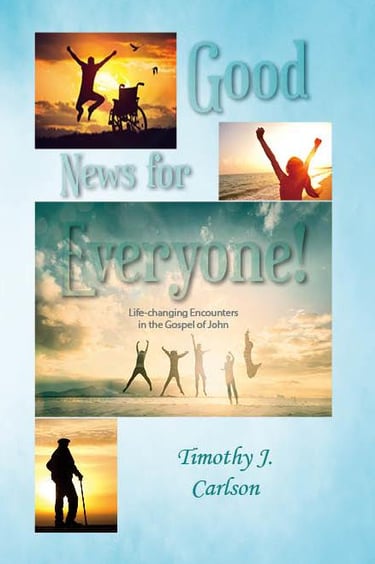
Good News for Everyone!
About the Author
Tim Carlson is a native of Illinois and Michigan. He is is a graduate of Johnson University (B.A. in Bible/Preaching, 1982) and Emmanuel Christian Seminary at Milligan College (M.A.R. in Church History, 1996). In over 35 years of ministry, Tim has served with congregations in Illinois, West Virginia, Virginia, Tennessee and Ohio. He is married to Patricia, and they currently make their home in East Sparta, Ohio, where they serve in ministry with the Christian Church of East Sparta.
The Purpose of this Book
First, this book is for people who do not know Jesus. The author’s intent is to provide glimpses of the One who is called “the Christ” to those who have heard of him but have not given him serious consideration for their lives. The encounters that John presents anecdotally reveal to us the claims, character and compassion of Jesus of Nazareth that deserve such deliberation.
Second, this book is for growing Christians who have a desire to learn more about the word of God, and especially the deeper (and sometimes difficult) meanings and truths within these important texts that are the focus of this study. More important than attaining a greater knowledge of the written word of God, however, is the ultimate goal for each one to grow in his or her knowledge of and relationship with the One who is the Living Word of God.
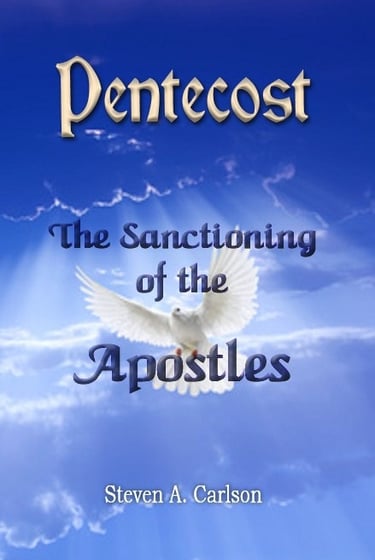
Pentecost - The Sanctioning of the Apostles
The Day of Pentecost was very meaningful for mankind. Only a handful of historical events, such as the days of creation or Christ’s birth, death, and resurrection, might be considered more significant. Beyond these, Pentecost is arguably the most momentous and consequential of all days. In fact, it could be said that it stands shoulder to shoulder with these other notable days since creation, as well as those critical moments of Jesus’ life, eventually culminated in the events of Pentecost. It was on that day that God’s ultimate goal, the establishment of the church, was realized.
Few believers would ever seek to trivialize what occurred on the Day of Pentecost. After all, this was the day a new covenant was instituted between God and men. However, over the past few centuries conflicting views have been advanced about the details of the Day of Pentecost as well as the implications of those details. What makes this so fascinating is that God’s Word is decidedly plainspoken in its chronicling of these events.
A proper perspective concerning the specifics of this special day is not merely helpful, but critical to appreciating a number of theological issues, not the least of which is the significance of apostolic authority. These men were personally selected by Jesus to establish his church here on earth. They, along with the prophets, are part of the foundation of the church, with Christ as the chief cornerstone (Ephesians 2: 20). Thus, respecting their role in the first century church can help men to honor God as he intends to be honored.
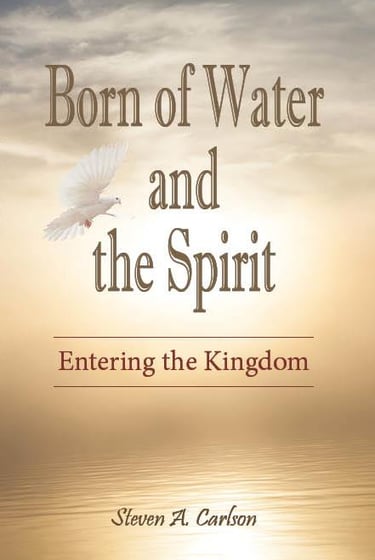
Born of Water and the Spirit - Entering the Kingdom
Now there was a man of the Pharisees, named Nicodemus, a ruler of the Jews; 2 this man came to Jesus by night and said to Him, “Rabbi, we know that You have come from God as a teacher; for no one can do these signs that You do unless God is with him.” 3 Jesus answered and said to him, “Truly, truly, I say to you, unless one is born again he cannot see the kingdom of God.” 4 Nicodemus said to Him, “How can a man be born when he is old? He cannot enter a second time into his mother’s womb and be born, can he?” 5 Jesus answered, “Truly, truly, I say to you, unless one is born of water and the Spirit he cannot enter into the kingdom of God. 6 That which is born of the flesh is flesh, and that which is born of the Spirit is spirit. 7 Do not be amazed that I said to you, ‘You must be born again.’ 8 The wind blows where it wishes and you hear the sound of it, but do not know where it comes from and where it is going; so is everyone who is born of the Spirit.” (John 3: 1-8, NASB)
____________________
The third chapter of the gospel of John is dynamic and filled with powerful messages. It begins with Jesus’ conversation with a Pharisee by the name of Nicodemus. During that exchange, Jesus explains that to enter God’s kingdom, one must be born again, or born of water and the Spirit. This statement by Jesus has been the source of considerable doctrinal debate over the past few centuries. In Born of Water and the Spirit: Entering the Kingdom, the author takes a deep biblical look into this critical teaching and what is expected of those who seek to enter the kingdom of God.
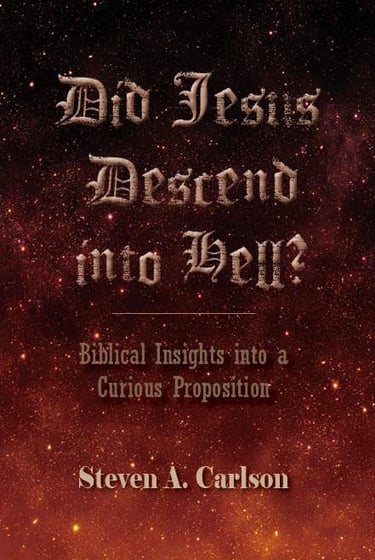
Did Jesus Descend into Hell?
Assorted versions of the Apostle’s Creed can be found in churches and libraries and on a host of websites. The first written version purportedly appeared sometime in the mid to late fourth century. Considered a pillar of Christian beliefs, this statement of faith has experienced a number of changes over the course of the past 1,500 years. Arguably, the most popular and most recognized modern version of the Apostle’s Creed reads as follows:
I believe in God, the Father almighty, creator of heaven and earth.
I believe in Jesus Christ, his only Son, our Lord.
He was conceived by the power of the Holy Spirit and born of the Virgin Mary.
He suffered under Pontius Pilate, was crucified, died, and was buried.
He descended into hell.
On the third day he rose again.
He ascended into heaven and is seated at the right hand of the Father.
He will come again to judge the living and the dead.
Notice the words “He descended into hell” (line five). This refers to the belief by many that after his crucifixion, during the time his body lay in the tomb, Jesus descended into hell (in spirit) and preached to the souls there. This is a long-held teaching in the Roman Catholic Church as well as certain other churches.
What happened during Jesus’ interment? Does Scripture offer insight into his spiritual activities while his body lay lifeless? Is the claim that he spent time in hell solidly grounded in God’s Word? In the book, Did Jesus Descend into Hell? Biblical Insights into a Curious Proposition, the author takes an in-depth look at what the Bible does and does not have to say about the mysterious time between Jesus’ death and resurrection.
-----------------------------------------------------------------------------------------------------------------------------------------------------------------------------
-----------------------------------------------------------------------------------------------------------------------------------------------------------------------------
-----------------------------------------------------------------------------------------------------------------------------------------------------------------------------
-----------------------------------------------------------------------------------------------------------------------------------------------------------------------------
-----------------------------------------------------------------------------------------------------------------------------------------------------------------------------
-----------------------------------------------------------------------------------------------------------------------------------------------------------------------------
Baptism and the Plan of Salvation
Within the world of theological literature, we discover two distinct audiences. The first audience consists of those who could be considered professional theologians, including ministers, theology professors, etc., who spend a considerable amount of their time studying. These individuals often like to test their intellectual prowess by perusing sophisticated works with advanced terminology that can challenge the minds of even the most elite scholars. The second audience is made up of those men and women who, while no less intelligent than the first audience, don’t particularly care what the word theology means and prefer to study books that state things in simpler terms.
Baptism and the Plan of Salvation is actually a rewrite of an earlier work, Baptism and the Battle for Souls. The reason for the rewrite is simple. The first book was specifically written to attract an audience of professional theologians. This was done in an effort to reach the men and women who are most influential in religious circles. Yet the average Christian is not particularly interested in being weighed down by books offering deep theological arguments.
Baptism and the Plan of Salvation is essentially the same book as Baptism and the Battle for Souls in that it holds the same chapters and headings as its predecessor. The difference is that this book has been written to the everyday Christian who simply wishes to know exactly what role baptism plays in God’s eternal plan. After all, salvation is much too important to be left to the professionals.
What is the origin of the rite of baptism? How did the early church view baptism? Is infant baptism scriptural? How does baptism correspond to Noah and the flood? What is baptism with the Holy Spirit? Wasn’t the thief on the cross saved without baptism? What does the Bible teach about the Sinner’s Prayer? How does baptism harmonize with salvation by grace through faith? Must I be baptized? In Baptism and the Plan of Salvation, these questions and more are given thoughtful consideration as the author faithfully preserves the biblical model of immersion in water for the forgiveness of sins.
Baptism and the Battle for Souls
Where did baptism originate and what is its relationship with the Abrahamic covenant? How did the early church view the rite of baptism? Is baptism the new circumcision? Are we born in original sin? Is infant baptism scriptural? How does baptism correspond to Noah and the flood? What was the purpose of the ministry of John the Baptist? What is the significance of the mode of baptism? What is baptism with the Holy Spirit? Were the apostles baptized in Jesus’ name? Wasn’t the thief on the cross saved without baptism? Was Cornelius saved prior to baptism? What is baptism for the dead? In whose name must I be baptized? What does the Bible teach about the Sinner’s Prayer? Did Paul dismiss baptism as part of the gospel message in his letter to the Corinthians? What is the purpose of baptism? How does Christian baptism harmonize with salvation by grace through faith? Must I be baptized?
Here is a strikingly comprehensive work defending the purpose and magnitude of the rite of Christian baptism. Sundry challenges to the efficacy of baptism are answered honestly and effectively as the author faithfully preserves the biblical model of immersion in water for the forgiveness of sins. If you have been seeking a treatise that candidly engages the matter of baptism and the impassioned debate surrounding this captivating subject, you will discover it in Baptism and the Battle for Souls.
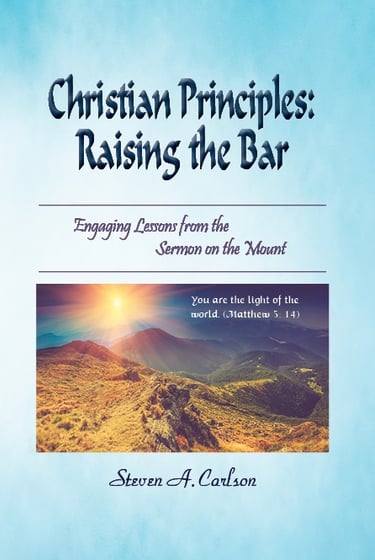
Christian Principles: Raising the Bar
The Old Testament Israelites were governed by the Mosaic Law with its many rules and rituals. Festivals were held to honor God and/or to serve as reminders of past events. Animal sacrifices were offered to address sins. Indeed, one’s faithfulness to God was generally measured by his/her diligence in obeying the law.
In keeping with his promise to Abraham (Genesis 18: 18), it was God’s plan to fulfill the provisional covenant of law through the covenant of grace of which we are fortunate to be a part. This covenant was founded upon Jesus’ sacrifice for the sins of men - a sacrifice that fundamentally changed the manner in which we relate to God. In the new covenant, humanity is offered the opportunity to worship God as he wishes to be worshiped. We now “worship the Father in spirit and truth” (John 4: 24).
Our walk with God in the new covenant is not measured by rigorous adherence to a multitude of rules and regulations; it is about worshiping God by living lives that honor him. Therefore, as the new covenant was ushered in, Jesus introduced a higher standard of worship for those who seek to glorify God. This new standard, which is characterized by an attitude of meekness and humility, is detailed to a large degree in the Sermon on the Mount and is initially outlined in the beatitudes at the beginning of the sermon (Matthew 5:1-12).
As we delve deeper, we learn that, rather than the historical “eye for an eye” philosophy by which men had been living, Jesus encouraged his followers to “turn the other cheek” (Matthew 5: 38-39). Tithing in the Old Testament was required by law (Deuteronomy 12: 6; 14: 22). However, Jesus taught that charitable giving is a reflection of one’s heart (Matthew 6: 19-21). In other words, Jesus raised the bar for those who seek to walk with God.
In Christian Principles: Raising the Bar, the author discusses in detail the Sermon on the Mount and the level to which Jesus challenged his followers. With common sense and reasoning, these teachings are examined and explained in terms that will hopefully help each of us effectively apply them in our individual lives.